
Former BJP MP Pragya Singh Thakur, acquitted in the 2008 Malegaon blast case, alleges torture by investigating officers and pressure to implicate Prime Minister Narendra Modi and other prominent figures.

'The directives to enhance last-mile funding, consider revival funds, and systemic reforms across the sector are expected to revive stalled projects, improve accountability, and accelerate the delivery of affordable and mid-income housing.'

The Supreme Court on Monday dismissed the pleas of telecom majors Vodafone, Airtel and Tata Teleservices seeking the waiver of adjusted gross revenue (AGR) dues. A bench comprising Justices J B Pardiwala and R Mahadevan called the pleas "misconceived".

The Supreme Court on Friday upheld JSW Steel's Rs 19,700-crore resolution plan for debt-ridden Bhushan Power and Steel Limited (BPSL), bringing down curtains to a prolonged legal battle that spanned nearly eight years.

The CBI has filed a case against six Jammu and Kashmir police officials for allegedly torturing a fellow constable in custody. The case was registered following a Supreme Court order.
The Supreme Court has directed the Maharashtra government and its state election commission to conduct local body elections, clarifying that the results will be subject to the court's final verdict, especially concerning the 50% quota limit. The court will hear pleas regarding OBC reservation in local bodies in January 2026.

Vice President Jagdeep Dhankhar on Thursday questioned the judiciary setting a timeline for the President to take decisions and act as a "super Parliament", saying the Supreme Court cannot fire a "nuclear missile" at democratic forces.

The Bombay High Court has imposed a cost of Rs 1 lakh on former cricket administrator Lalit Modi while dismissing his petition seeking an order to BCCI to pay penalty of Rs 10.65 crore imposed on him by ED for violating Foreign Exchange Management Act (FEMA).

In a significant development, the Supreme Court on Thursday recalled its controversial May 2 verdict that had ordered liquidation of Bhushan Power & Steel Limited (BPSL) while setting aside a resolution plan of JSW Steel Limited for the ailing firm. A bench comprising Chief Justice B R Gavai and Justice Satish Chandra Sharma observed that the May 2 judgment, authored by Justice Bela M Trivedi, since retired, did not "correctly consider the legal position as has been laid down in the catena of judgments".
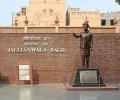
Former Supreme Court judge Justice Rohinton Nariman has warned that events similar to the Jallianwala Bagh massacre could occur if the 'basic structure' doctrine of the Constitution is diluted. In his new book, 'The Basic Structure Doctrine: Protector of Constitutional Integrity,' Nariman argues that the 1973 Kesavananda Bharati judgment, which established the doctrine, is essential for protecting fundamental rights and preventing constitutional amendments that could lead to such tragedies. Nariman's concerns are echoed by Supreme Court judge Justice K V Viswanathan, who applauds the book for its "chilling clarity" and underscores the importance of the Kesavananda Bharati ruling. The book provides a detailed analysis of the doctrine and its implications, highlighting the robustness of the Kesavananda Bharati judgment and the lack of a compelling alternative theory.
"International law doesn't recognise India's unilateral and illegal actions of 5 August 2019. The judicial endorsement by the Indian Supreme Court has no legal value. Kashmiris have an inalienable right to self determination in accordance with the relevant UN SC resolutions," Pakistan's caretaker Foreign Minister Jalil Abbas Jilani said in a post on X.

The CJI called Justice Gavai his "biggest support" while expressing confidence in the latter's leadership and commitment to constitutional values.
The Supreme Court has stayed the Calcutta High Court's decision that stalled the implementation of a revised list of Other Backward Classes (OBCs) in West Bengal, providing relief to the state government.

The Supreme Court delivered a split verdict on a plea by the Maharashtra government seeking a review of the court's earlier direction to form a special investigation team (SIT) with Hindu and Muslim officers to investigate the 2023 Akola communal riots. Justice Sanjay Kumar refused to review the direction, while Justice Satish Chandra Sharma agreed to hear the review plea in open court.
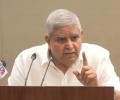
Rajya Sabha member Kapil Sibal has criticised Vice President Jagdeep Dhankhar for questioning the judiciary over the timeline for the president to take decisions, calling it "unconstitutional " and a lowering of the dignity of the chair. Sibal asserted that Dhankhar's remarks are not neutral and amount to an attack on the judiciary by the executive. He also pointed out that the president acts on the aid and advice of the council of ministers, and therefore, the president's power cannot be curtailed. Sibal urged Dhankhar to seek a review of the judiciary's decision or an advisory opinion from the Supreme Court if he has problems with it. He also questioned why Dhankhar only focuses on actions taken during Congress governments and not after 2014.

The Supreme Court of India has ruled that courts have the authority to determine the appropriate interest rate in cases involving share valuation, considering the specific facts of each case. The decision came in a 52-year-old legal battle between private parties and the Rajasthan government over the valuation of shares transferred to the state government. The court also modified the interest rate applicable to delayed payments, awarding 6 percent per annum simple interest from July 8, 1975, until the date of decree, and 9 percent per annum simple interest from the date of decree until realization of the payment.

The Congress on Wednesday said the Supreme Court judgment on certain matters relating to transactions by the Adani Group has proven to be 'extraordinarily generous' to Securities and Exchange Board of India (SEBI) and asserted that the party's fight against crony capitalism and its ill-effects on prices, employment and inequalities will continue.

Expressing surprise over political parties not coming forward in filing objections related to 65 lakh excluded voters, the top court directed the chief electoral officer of Bihar to implead them in the court proceedings.
The West Bengal School Service Commission (WBSSC) on Friday said it would abide by the Supreme Court directive and soon initiate the process of conducting fresh exams for all teaching and non-teaching candidates, who took part in the now-invalidated 2016 job recruitment exercise.

Muslim body Anjuman Intezamia Masjid committee on Thursday moved the Supreme Court against the Allahabad high court order permitting an Archaeological Survey of India (ASI) survey at the Gyanvapi mosque.

The Supreme Court refused to interfere with an order dismissing Jacqueline Fernandez's plea to quash an ECIR in a Rs 200 crore money laundering case involving Sukesh Chandrasekhar.
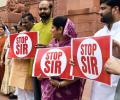
The Supreme Court has warned that it will set aside the special intensive revision (SIR) of electoral rolls in Bihar if any illegality is found. The court is reviewing the validity of the Bihar SIR and its potential impact on a similar exercise across India.

The Supreme Court on Monday expressed its displeasure at the Delhi High Court Bar Association for questioning the representation of women judges in the top court while arguing for reservation for women lawyers in the high court bar. The court refused to hear further arguments from the bar body and set November 29 for final arguments on the issue of reservation. The court had previously directed the DHCBA to reserve the post of treasurer for a woman and consider reserving one more post for a woman in the five-member office-bearer body. It had also directed that at least three out of the 10 executive members be women, with at least one being a senior designated advocate.

The Supreme Court on Monday refused to grant interim stay on a Delhi high court judgment holding senior advocates R K Anand and I U Khan guilty of contempt of court for trying to influence a key witness in the BMW hit-and-run case. A bench headed by Justice B N Agrawal, however, admitted the appeal filed by them and issued notices to respondents.

The Supreme Court on Tuesday came down heavily on the Karnataka government over actor Kamal Haasan's film "Thug Life" not being released in the state, saying mob and vigilantes cannot be allowed to take to the streets.

'The government does not want to be transparent or accountable. Therefore, they do not want to appoint information commissioners.'

Additional Sessions Judge Hardeep Kaur was hearing the arguments regarding the applications. Special Public Prosecutor Atul Shrivastava cited a Supreme Court judgment and said the accused had to approach the police commissioner, who would then form a committee regarding the same.

The Delhi government has requested the Centre's air quality panel to suspend the fuel ban on older vehicles, citing implementation challenges and public discontent. The government is also seeking solutions to restrictions on end-of-life vehicles.

'Presumption of innocence must guide all formal actions, but transparency must not be mistaken for pre-judgment.' 'The cruel irony, however, is that Justice Varma is a fine judge who enjoys a reputation for writing well-reasoned judgments.'
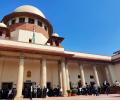
Allowing the Centre's review of the August 23, 2022 verdict, a bench Chief Justice of India DY Chandrachud, Justices PS Narasimha and Manoj Misra recalled the judgement delivered by a three-judge bench headed by former CJI NV Ramana.

"How can a court order this? To say that the judgment, a public document, be pulled down will have very serious ramifications," said a bench comprising Chief Justice D Y Chandrachud and Justices JB Pardiwala and Manoj Misra after taking note of the submissions of Ikanoon Software Development Pvt Ltd, a Bengaluru-based legal website.
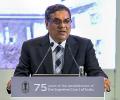
Justice Sanjiv Khanna 'belongs to that school of legal luminaries who give the highest primacy to facts.'

The stage is set for a direct contest between NDA nominee C P Radhakrishnan and joint opposition candidate B Sudershan Reddy for the vice-presidential election. The BJP-led alliance has a clear edge in the poll necessitated due to the sudden resignation of Jagdeep Dhankhar.
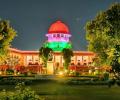
The Supreme Court of India has referred the matter of the Right to Education (RTE) Act's applicability to minority schools to a larger bench for adjudication, expressing concerns about potential misuse and fragmentation of the education system.

'Given the current dispensation, I have no hope for the legislature passing a law in favour of the LGBTQ community.'

US e-commerce giant Amazon has written to Ajay Tyagi, chairman of market regulator Securities and Exchange Board of India (Sebi), to take action as is necessary to comply with the Supreme Court Judgment, related to the $3.4-billion merger deal between Future Group and Reliance. Amazon has requested Sebi to direct the Indian stock exchanges to withdraw the Observation Letters related to this deal with immediate effect. In January this year, Sebi had given a go-ahead onto Future Group's scheme of arrangement and sale of assets to Reliance, based on which the Bombay Stock Exchange also granted its "no adverse observation" report to the Rs 24,713-crore ($3.4 billion) deal.
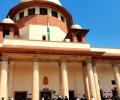
'If we stay silent now, we betray the very foundation of justice in this country.'

'The state of Gujarat was to my mind 'partisan and over enthusiastic' in the way it dealt with remission applications.'

The Kashmir issue should be resolved through dialogue and consultation between India and Pakistan, China said on Tuesday while reacting to the Supreme Court judgment on Article 370 upholding the central government's decision on the erstwhile state of Jammu and Kashmir.

The Supreme Court has directed a Maharashtra authority to respond to a man's plea for initiating contempt action against it after his properties were demolished for allegedly raising anti-India slogans during a cricket match. The petitioner, who hails from Sindhudurg district in the state, claims his house and shop were demolished on February 24 following an FIR against him, his wife, and his 14-year-old son for allegedly raising anti-India slogans during the India-Pakistan Champions Trophy match. The plea argues that the demolition violated the Supreme Court's November 13, 2024 verdict on demolition of properties, which barred demolition without a prior showcause notice and 15 days' time for the aggrieved party to respond. The petitioner seeks directions for initiating contempt proceedings against the chief officer and administrator of the Malvan Municipal Council.
